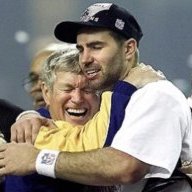
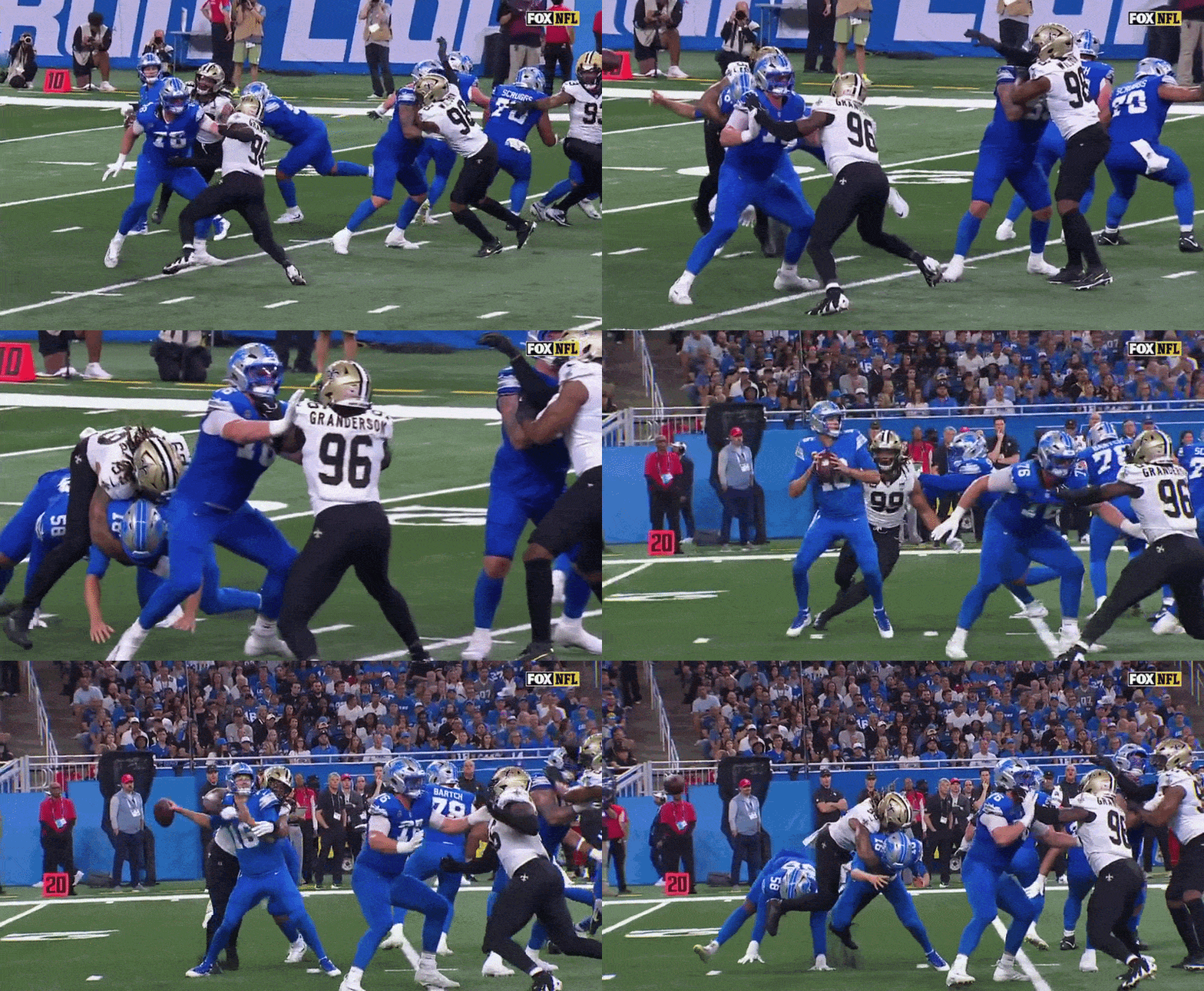
NFL again says 2 and 2 make 5.

  • To unlock all of features of Rams On Demand please take a brief moment to register. Registering is not only quick and easy, it also allows you access to additional features such as live chat, private messaging, and a host of other apps exclusive to Rams On Demand.
  • Thread Starter Thread Starter
  • #61
From the video you posted, this is the point where his forward motion starts, and he still has control of the ball. The question on fumble vs. forward pass is whether the QB has control of the ball when his arm starts moving forward. If his arm is moving forward, even if the defender knocks it out of his hand before he completes his motion and the ball goes backwards, it's still a forward pass. If the defender jars it loose before the throwing motion starts moving forward, it's a fumble, even if the ball is propelled forward by the QB's throwing motion.

Now, if a QB intentionally throws the ball backwards, that's a different issue. But we're talking about a QB being hit by a defender as he's in the midst of his throwing motion. The rule has always been (as long as I remember) that it's a forward pass regardless of where the ball ends up if his arm is starting to move forward (even ever so slightly) with control of the ball. It's a fumble, regardless of where the ball ends up, if he loses control of the ball before the arm starts its forward movement.
You are correct except that his arm isn't going forward, it is going at an angle from the line of scrimmage backwards. Before he brought the ball up to pass, his upper body got twisted and is pointing away from the line of scrimmage. So when he starts his throwing motion, it is not forward and then before his arm heads towards the line of scrimmage he fumbles it.

That is the way I see it.

I think the thing that really sets me off, is when the refs are explaining their decision, they mention his intent. That cannot be part of the decision. The arm was going backwards or it wasn't. His intent means nothing. The explanation tells me they see the arm going backwards too.
 
  • Like
Reactions: XXXIVwin
Such a bullshit call. As egregious as Tuck Rule Bullshit in New England that cost us a Super Bowl win. Thats a Fumble last Sunday in Detroit and the NFL can go fuck itself for saying otherwise.
 
...

I think the thing that really sets me off, is when the refs are explaining their decision, they mention his intent. That cannot be part of the decision. The arm was going backwards or it wasn't. His intent means nothing. The explanation tells me they see the arm going backwards too.
Exactly. The crazy part is the ref had to contort into a pretzel and guess the intent of a QB to overturn a clear fumble. What if Goff was executing a Stafford-esque no-look backward fleaflicker lateral? Maybe? We don't know.

So how about we don't GUESS the intent and just go with what our eyes saw like we have for all those decades I've watched football?
 
  • Thread Winner
Reactions: XXXIVwin
You are correct except that his arm isn't going forward, it is going at an angle from the line of scrimmage backwards. Before he brought the ball up to pass, his upper body got twisted and is pointing away from the line of scrimmage. So when he starts his throwing motion, it is not forward and then before his arm heads towards the line of scrimmage he fumbles it.

That is the way I see it.

I think the thing that really sets me off, is when the refs are explaining their decision, they mention his intent. That cannot be part of the decision. The arm was going backwards or it wasn't. His intent means nothing. The explanation tells me they see the arm going backwards too.
The question is whether his arm is going forward in relation to his throwing motion (it is), not whether his arm is going forward towards the LOS. The hit caused his arm to move in that direction. Again, it would be different if Goff intentionally threw the ball backwards to avoid the sack. But I don't think anyone would argue that happened here. (Unlike the Russell Wilson play mentioned earlier in the thread.)
 
The question is whether his arm is going forward in relation to his throwing motion (it is), not whether his arm is going forward towards the LOS. The hit caused his arm to move in that direction. Again, it would be different if Goff intentionally threw the ball backwards to avoid the sack. But I don't think anyone would argue that happened here. (Unlike the Russell Wilson play mentioned earlier in the thread.)
Based on what we learned this weekend, that's all wrong!
 
Did Terry McAulay call that one in too? Still waiting on repercussions from that bullshit from the Seattle 2 pt debacle.
Thank you. I’ve been wigging out about that since that game. What the hell is Amazon‘s employee doing calling in and essentially advocating either for one team or against the other?
 
The question is whether his arm is going forward in relation to his throwing motion (it is), not whether his arm is going forward towards the LOS. The hit caused his arm to move in that direction. Again, it would be different if Goff intentionally threw the ball backwards to avoid the sack. But I don't think anyone would argue that happened here. (Unlike the Russell Wilson play mentioned earlier in the thread.)
I am having a hard time wrapping my head around that. The LOS is the whole point. The LOS is the center of the game. You are saying that this rule that turned a backwards pass to forward pass has no reference point other than his intent? Because his throwing motion is not a reference point other than if he is throwing or not.

Then Wilsons pass should have been called a forward pass too. I guarantee he wasn't trying to throw the ball 20 yards backwards and out of bounds because a backwards pass is essentially a fumble and wherever it goes out of bounds is where it is marked and he was being hit. So intent should have put that ball back to the line of scrimmage.
Don't try too hard. Its a fuckin Fumble because as 40-50 year veterans watching this League our eyes and brain TELLS us its a Fumble.

Any attempt otherwise is simply modern day Douchery.
 
I am having a hard time wrapping my head around that. The LOS is the whole point. The LOS is the center of the game. You are saying that this rule that turned a backwards pass to forward pass has no reference point other than his intent? Because his throwing motion is not a reference point other than if he is throwing or not.

Then Wilsons pass should have been called a forward pass too. I guarantee he wasn't trying to throw the ball 20 yards backwards and out of bounds because a backwards pass is essentially a fumble and wherever it goes out of bounds is where it is marked and he was being hit. So intent should have put that ball back to the line of scrimmage.
No, it's not. QBs throw forward passes behind the LOS all the time. Goff was trying to throw a forward pass. He got hit during his wind-up. He had control of the ball as he started the forward part of his motion and the force of the hit caused it to go backwards. And it's not abnormal for them to judge intent. They judge intent on intentional grounding too.

It doesn't matter if Wilson was trying to throw the ball backwards. He intentionally threw the ball while facing the wrong direction. Donald's hit didn't jar the ball from his hands. You're comparing apples to oranges. Look, you can dislike the rule, but they're entirely different situations.

Let me give you a hypothetical. Matthew Stafford drops back to pass, he begins his throwing motion, and as his arm is coming forward, the DE coming around the corner slaps the ball out of his hand. The ball lands a yard behind Stafford. Is that a fumble? No, it's not. Stafford's arm was moving forward.

Here's another hypothetical, Matthew Stafford again drops back to pass, he begins his throwing motion, and before his arm starts coming forward, the DE slaps the nose of the football. This causes Stafford to lose control right before his forward motion starts. Stafford's forward motion propels the ball ten yards past the LOS. Is this a fumble? Yes. We've seen that called a fumble.

It's not about where the ball lands. It's about whether the QB was trying to throw a forward pass and had control of the ball when the forward part of his throwing motion began.
 
  • Like
Reactions: Twopointtry
No, it's not. QBs throw forward passes behind the LOS all the time. Goff was trying to throw a forward pass. He got hit during his wind-up. He had control of the ball as he started the forward part of his motion and the force of the hit caused it to go backwards. And it's not abnormal for them to judge intent. They judge intent on intentional grounding too.

It doesn't matter if Wilson was trying to throw the ball backwards. He intentionally threw the ball while facing the wrong direction. Donald's hit didn't jar the ball from his hands. You're comparing apples to oranges. Look, you can dislike the rule, but they're entirely different situations.

Let me give you a hypothetical. Matthew Stafford drops back to pass, he begins his throwing motion, and as his arm is coming forward, the DE coming around the corner slaps the ball out of his hand. The ball lands a yard behind Stafford. Is that a fumble? No, it's not. Stafford's arm was moving forward.

Here's another hypothetical, Matthew Stafford again drops back to pass, he begins his throwing motion, and before his arm starts coming forward, the DE slaps the nose of the football. This causes Stafford to lose control right before his forward motion starts. Stafford's forward motion propels the ball ten yards past the LOS. Is this a fumble? Yes. We've seen that called a fumble.

It's not about where the ball lands. It's about whether the QB was trying to throw a forward pass and had control of the ball when the forward part of his throwing motion began.
He started his motion with his arm going backwards. Looses control during that motion. All the other stuff is BS. I get the scenarios you describe. Watched football since 1965.
In every other pass the motion starts from the top and goes forward. If the ball comes out before that it’s a fumble. I know that. But his arm wasn’t going forward. That is my beef. That should matter. I get that it doesn’t matter because the rule’s definition ignores that.
 
IMO, all this talk about "intent" is garbage and should be stricken from the rule book. Who the fuck cares if Goff's "intent" was to throw the ball forward? Why in the hell should that even be a relevant consideration?

The ball left Goff's hand and immediately went backward and then hit the ground. Should be a live ball. We all "know" that intuitively.

And yes, I think it could even be argued that Wilson's "intent" was to that throw the ball downfield. He was disoriented and did two full 360 spins, the second one by being thrown like a ragdoll by AD. But again... who the hell cares what Wilson's "intent" was? The end result should be the same. The ball went straight backwards... just like Goff's pass.

(Only carve-out exception I'd make is for the "intentional grounding" rule. Yes, in that instance the ref is of course required to make a subjective ruling based on "intent.")

But the whole "intent" issue should be OMITTED from all debates about whether a ball is "live" and if it goes backwards or forwards. Just let physics be the judge! Intent should be irrelevant.
 
We need to go back to the old days where, if a defender knocks the ball loose from the QB - regardless of arm motion - it's a fumble.

Too easy for today's over-thinking NFL.
 
  • Like
Reactions: majrleaged
He had control of the ball as he started the forward part of his motion and the force of the hit caused it to go backwards.
His arm was not moving forward and not even close. It was acknowledged that it wasnt moving forward, and didnt need to because of the alleged "intent" rule.
 
IMO, all this talk about "intent" is garbage and should be stricken from the rule book. Who the fuck cares if Goff's "intent" was to throw the ball forward? Why in the hell should that even be a relevant consideration?

The ball left Goff's hand and immediately went backward and then hit the ground. Should be a live ball. We all "know" that intuitively.

And yes, I think it could even be argued that Wilson's "intent" was to that throw the ball downfield. He was disoriented and did two full 360 spins, the second one by being thrown like a ragdoll by AD. But again... who the hell cares what Wilson's "intent" was? The end result should be the same. The ball went straight backwards... just like Goff's pass.

(Only carve-out exception I'd make is for the "intentional grounding" rule. Yes, in that instance the ref is of course required to make a subjective ruling based on "intent.")

But the whole "intent" issue should be OMITTED from all debates about whether a ball is "live" and if it goes backwards or forwards. Just let physics be the judge! Intent should be irrelevant.
The Wilson play is not comparable. He didn't throw the ball backwards because Donald's hit knocked it out of his hands. He threw it backwards intentionally because he got turned around and was trying to avoid a sack.

Intent is a relevant consideration because the ball is sometimes knocked out of the QB's hand after his arm starts coming forward. I don't think whether it's a fumble or not should depend on where the ball lands.
His arm was not moving forward and not even close. It was acknowledged that it wasnt moving forward, and didnt need to because of the alleged "intent" rule.
In relation to his throwing motion, it was. He wound up and had control of the ball when the forward part of his throwing motion commenced. That's why intent matters.
 
Intent is a relevant consideration because the ball is sometimes knocked out of the QB's hand after his arm starts coming forward. I don't think whether it's a fumble or not should depend on where the ball lands.

In relation to his throwing motion, it was. He wound up and had control of the ball when the forward part of his throwing motion commenced. That's why intent matters.
We'll have to agree to disagree on this one, @jrry32.

Maybe I'm being arrogant, but I sure as hell think I could come up with a set of consistent rules that are better than what the NFL currently uses.

IMO the ruling on the Goff play was an utter travesty.

Pereira said that Goff had "started the throwing motion of a forward pass as soon as he started moving the ball UP. " I think that's a terrible rule that should be stricken.

You said that the key moment was when Goff's arm was "moving forward" as in "moving in front of Goff's torso." I think this criterion is terrible also. A better criterion would be "the QB's arm is only classified as moving forward if the arm is moving in the direction of the opponent's goalline." This is in keeping with common sense of what we all think of as a "forward pass." A forward pass moves toward the opponents goal line. A backward pass moves toward one's own goalline. Simple. Clean. Consistent.

Hypothetical One: QB's arm is moving forward with possession of the ball, defender swats at and makes contact with ball, ball then lands behind QB toward his own goal line. This is currently considered an incomplete forward pass, as it should be. Reasoning: this was an "incomplete pass" as soon as the ball made contact with defender. The fact that the ball after it was "incomplete" bounced backward is irrelevant.

Hypothetical Two, very similar to the one you described: QB's arm is moving forward with possession of the ball, defender swats at QB's forearm but defender does NOT make contact with ball, ball flutters in the air and then lands on the ground. In my opinion, this should be simply based on physics. If the ball lands in front of the release point, it should be an incomplete pass. If the ball lands even with the release point or behind it, this should be considered a fumble. IMO this is in keeping with the internal logic of football that we've all watched for decades. Since the ball never made contact with any other player on either offense or defense before hitting the ground, it should be considered a "forward pass" if it went forward, and it should be considered a live ball if it went backward. Again, simple, clean consistent.

In all of the scenarios I can think of, the question of "intent" can and should be irrelevant. The primary keys are "is the thrower's arm moving toward the opens goal line" and "is the ball moving toward the opponents goal line." Once these two factors become primary, the question of intent no longer needs to matter at all.
 
In the minds of all QBs the intent is to throw a forward pass on every snap, but if it doesn’t actually happen then
VSQXEE56LVDH5HE632GVV3HKYA.gif
 
We'll have to agree to disagree on this one, @jrry32.

Maybe I'm being arrogant, but I sure as hell think I could come up with a set of consistent rules that are better than what the NFL currently uses.

IMO the ruling on the Goff play was an utter travesty.

Pereira said that Goff had "started the throwing motion of a forward pass as soon as he started moving the ball UP. " I think that's a terrible rule that should be stricken.

You said that the key moment was when Goff's arm was "moving forward" as in "moving in front of Goff's torso." I think this criterion is terrible also. A better criterion would be "the QB's arm is only classified as moving forward if the arm is moving in the direction of the opponent's goalline." This is in keeping with common sense of what we all think of as a "forward pass." A forward pass moves toward the opponents goal line. A backward pass moves toward one's own goalline. Simple. Clean. Consistent.
Well, there are many throws each game where the QB throws a screen pass towards the sideline. Those passes are almost always forward passes, but he's not facing the opponent's goal-line. It's hard to create a simple, objective standard that governs all situations.

And you say if the arm is moving towards the direction of the opponent's goal-line. At what point in the process? At any point? When the ball is dislodged? I'll also note that Goff's arm did move forward, but the ball didn't follow because his hand was facing the wrong direction due to the hit.

Look, there might be a better rule to be had here. You may be on the right track. I'm not saying the rule is beyond criticism. My point in responding to people has been to say that the call was the correct one based on the rules we have and that there is a level of rationality to those rules. They're ordinarily easy to administer. This was a rare play and a rare situation. Usually, when a QB gets hit while throwing, it's as simple as "did the QB have control of the ball when his hand started to move forward"? If the answer is yes, it's a pass. If the answer is no, it's a fumble.

The Goff play was just an extraordinarily weird one because he did have control when his throwing motion entered its forward phase, but the force and trajectory of the hit caused the ball to come out of his hand in the wrong direction. I can't remember the last time I saw something like that happen.
 
. It's hard to create a simple, objective standard that governs all situations.

And you say if the arm is moving towards the direction of the opponent's goal-line. At what point in the process? At any point?
I disagree in that, yes, I think it's entirely possible to create a simple objective standard. (Or at the very least one that is better than what they have now, which is fairly good, with the big exception of the Goff loophole).

Regarding throwing motion, the key time period should be exclusive to "the movement of the QB's arm immediately preceding release." But the movement of the QB's arm is irrelevant over 99% of the time-- the actual flight path of the ball should almost always be the deciding and objective determining factor.

One big helpful aspect to my idea is the simple physics involved. Well over 99% of the time, if "the QB's arm is moving toward the opponents goal line immediately prior to release" it stands to reason that "the path of the ball would move toward the opponent's goal line." (Again, this is why the Goff play should be so easily covered by a simpler rule-- Goff's arm was not moving toward the opponents's goal line, as we can see by how obvious it was that the ball went almost straight backward.)

But really, in the final analysis, the flight path of the ball should be the determining factor. If the ball moves forward and makes contact with any player (on offense or defense) it is immediately a forward pass. But in the case where the ball never makes contact with ANY player prior to hitting the ground, ANY ball that goes backward should be a live ball.

In my scenario, the only time that the "forward motion of the arm toward opponents goal line " would come into play only on rare occasions (such as when the defender makes contact with ball prior to the ball being released from the QB's hand.)

And regarding your comment about how screen passes are common: yes, I agree, but it doesn't matter which way a QB is "facing"-- all that matters is whether the QB's arm moves downfield and the ball naturally follows that downfield motion. And if the ball is deemed to be "parallel", then it's a live ball.

A good example for my proposed rule is the Music City Miracle play. That's the kind of objective analysis we need to employ with this debate here. Who the hell cares what Frank Wycheck's "intent" was?!?! The announcers had careful analysis about the exact point of release from Wycheck's hand until the point of contact with Dyson. THAT is the kind of analysis we need that makes common sense. DID THE BALL GO FORWARD OR BACKWARD. Period. End of story. As Joe Theismann said, the positioning of Wycheck's body and arm are irrelevant... the key factor is the flight part of the ball. All that is needed is a clear definition of "beginning point of ball's flight path" and "end point of ball's flight path."

(And yes, of course this was a special teams play and not a scrimmage play, but the contours of the debate obviously apply using the same logic).


View: https://m.youtube.com/watch?v=P34sgtozcAM&pp=0gcJCYsCo7VqN5tD&ra=m
 
Last edited:
Well, there are many throws each game where the QB throws a screen pass towards the sideline. Those passes are almost always forward passes, but he's not facing the opponent's goal-line. It's hard to create a simple, objective standard that governs all situations.

And you say if the arm is moving towards the direction of the opponent's goal-line. At what point in the process? At any point? When the ball is dislodged? I'll also note that Goff's arm did move forward, but the ball didn't follow because his hand was facing the wrong direction due to the hit.

Look, there might be a better rule to be had here. You may be on the right track. I'm not saying the rule is beyond criticism. My point in responding to people has been to say that the call was the correct one based on the rules we have and that there is a level of rationality to those rules. They're ordinarily easy to administer. This was a rare play and a rare situation. Usually, when a QB gets hit while throwing, it's as simple as "did the QB have control of the ball when his hand started to move forward"? If the answer is yes, it's a pass. If the answer is no, it's a fumble.

The Goff play was just an extraordinarily weird one because he did have control when his throwing motion entered its forward phase, but the force and trajectory of the hit caused the ball to come out of his hand in the wrong direction. I can't remember the last time I saw something like that happen.
Yeah, and thats a Fumble....